



Following a strong period of economic recovery, Ireland has positioned itself as a noteworthy participant in digital governance. Surrounded by world-class digital firms, the country is now (finally) starting to leverage technology for effective public service.
This essay examines Ireland’s current push to modernise its public sector through digital transformation, with a spotlight on healthcare. It outlines how strong ambition and new frameworks are moving Ireland forward, while also addressing the persistent challenges from fragmented legacy systems and slow progress in e-health. Drawing on international best practices and a user-centred approach, the piece explores whether Ireland can bridge the gap between policy aspirations and the delivery of genuinely effective digital services.
The Irish government are quite happy with their progress toward their Harnessing Digital policy framework, with the “ambition to continue to be a European and global digital leader, and our strong commitment to progressing the digital transformation of our economy and society.”
An eighth-place ranking in the 2023 OECD Digital Government Index would have you think that Ireland has its act together. And it does, to a degree. An intertwined series of policies, largely driven by a whole-of-government approach to implementing its Better Public Services initiative shows a very nice pathway to progress, full of good intentions.
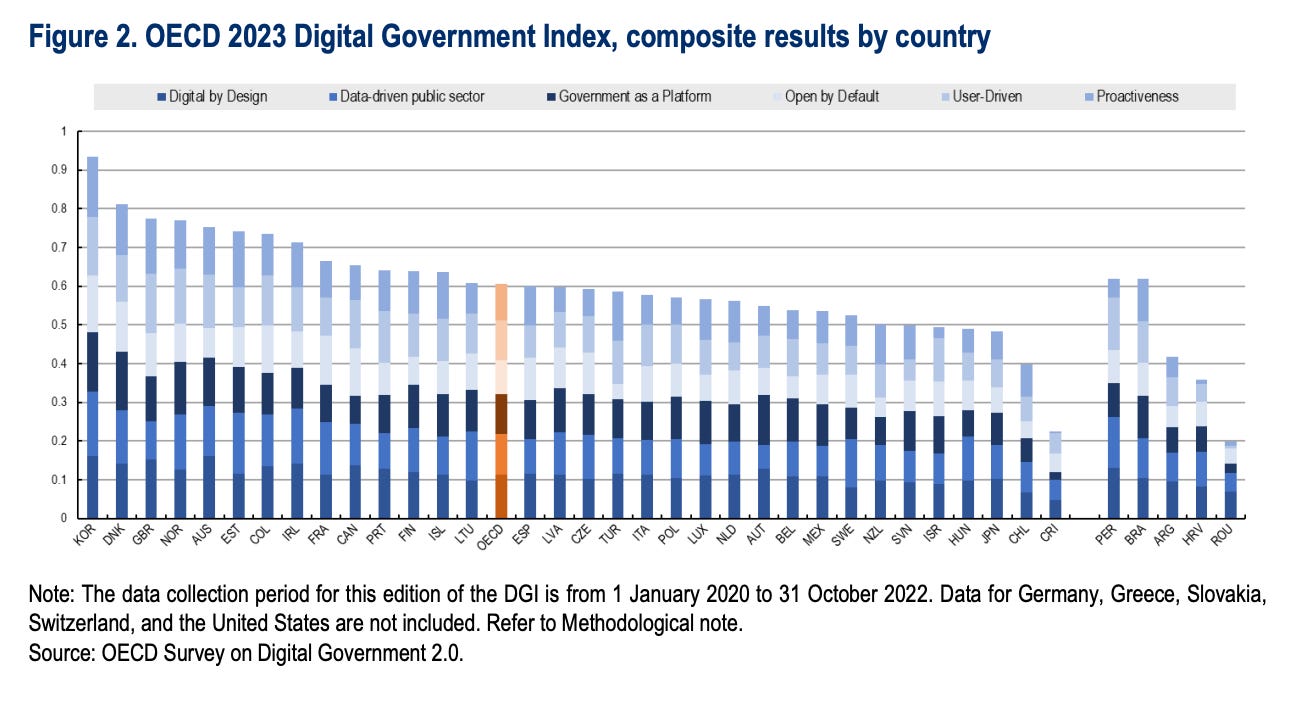
Many would (rightly) argue that graphs, charts, and frameworks often don’t mean all that much by themselves. Governments boasting about alleged digital superiority, while ignoring the vast shadow cast by private sector development is like “celebrating being the best laggards in the world”, as one of our professors at UCL’s Institute for Innovation and Public Purpose recently put it.
But those in Government who champion these rankings, must live by the sword and die by the sword. Across the European Union, Ireland ranks dead-last in e-health performance per its EU 2024 eHealth Indicator Survey. By quite a distance, too: coming in at a participation-medal rate of 11%, compared to second-last Czechia, at 51%.
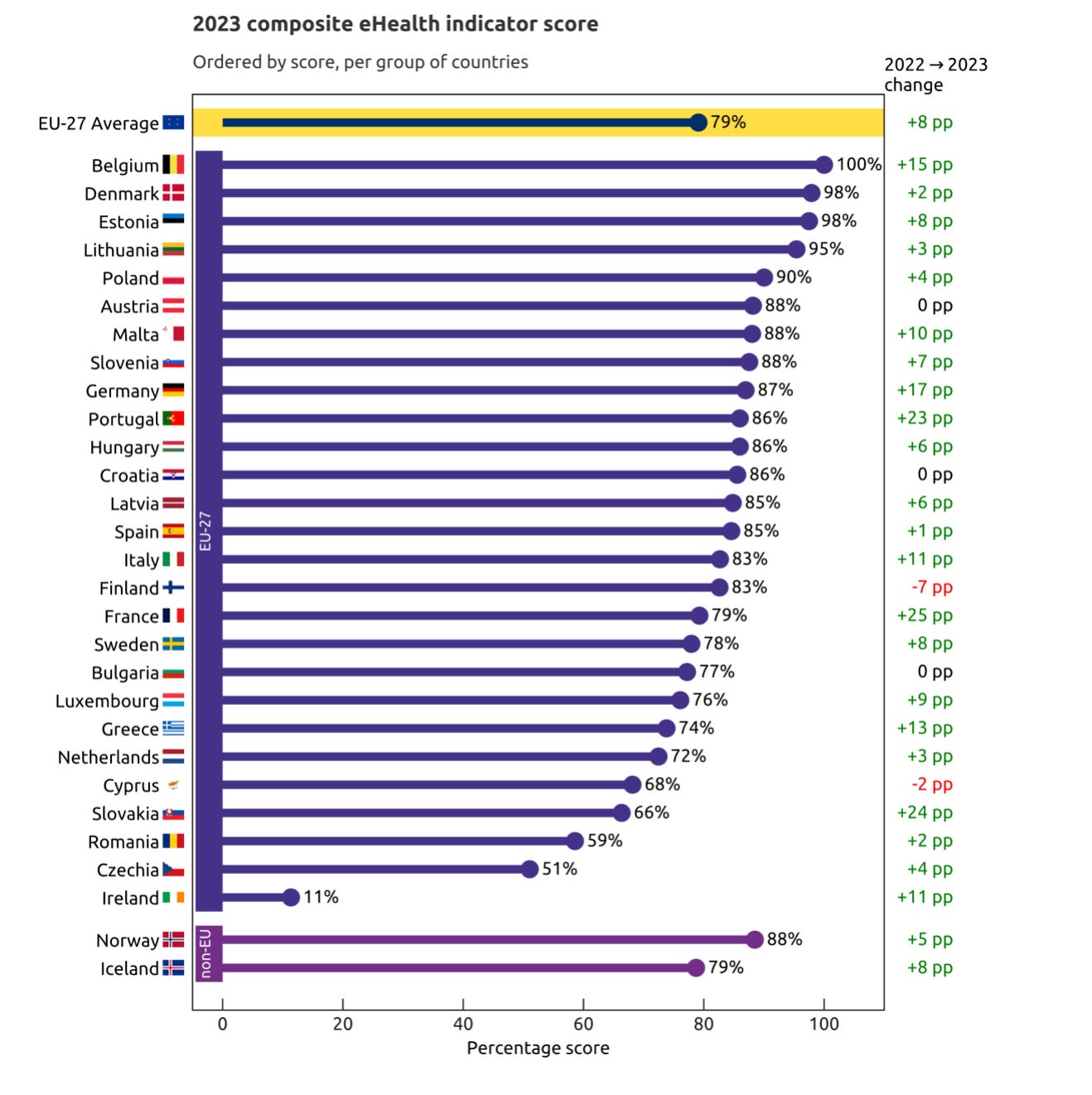
The HSE are acutely aware of the lagging nature of e-health in government, expressing the multiplicity of challenges across fragmented data, legacy systems, and historical underinvestment in their Digital Health Strategic Implementation Plan:
Our health service is held back with inconsistent, paper based and siloed documentation of patient interactions. Paper based record-keeping such as these are time-consuming, inefficient, and often susceptible to errors. Consequently, essential patient information remains trapped in isolated repositories, preventing an integrated approach to patient care. The result is a lowered efficiency of healthcare delivery and potential compromise on the quality of patient care.
Recognising the urgency to do something, the government has launched Digital for Care: A Digital Health Framework for Ireland 2024–2030 in the hopes of improving the situation, with the digital transformation of the Health Service Executive (HSE) at the forefront of its efforts.
A recent survey by Ireland’s Health Information and Quality Authority (HIQA) showed that 91% of the public and 88% of healthcare professionals think that people will be better informed if they have access to their health records. 74% of the public said that they would access their online health record when it is made available online. Achieving the robust digital transformation envisioned for Ireland’s e-health sector necessitates a shift beyond mere technological upgrades. The Government needs to fully embrace user-centred design.
The imperative of user-centred design
Enter Matt Edgar, a service design expert who argues that we need to view health transformation holistically. His work on service design provides invaluable insights to guide health transformation, emphasising the imperative to begin from the patient’s perspective. Thinking about their whole digital journey, from the initial referral process to actually getting to the appointment, while remembering their expectations are shaped by that slick banking app they use every day.
Edgar stresses the importance of holistic design, advocating for research into patient experiences across the entire service, rather than within isolated organisational siloes. He argues that people experience health as a continuous journey, not as a series of disconnected parts and if Ireland’s e-health efforts are going to be successful, they will need to provide a joined-up set of healthcare services, placing control in the hands of patients as experts of their own lives.
Edgar is adamant that it’s not just about the patients; staff need the tools and operational excellence to work across these digital services, too. They need to understand the patient’s journey, not just their part in the process. Flexible systems that show useful information about each patient (like their needs and support networks) are crucial. Edgar rightly points out that if the system is a pain for staff to use, they won’t recommend it to patients. Simple as that.
So, the plan? Ireland’s e-health needs to focus on creating systems that don’t make you want to rage-quit and throw your phone out the window. Intuitive interfaces are essential.
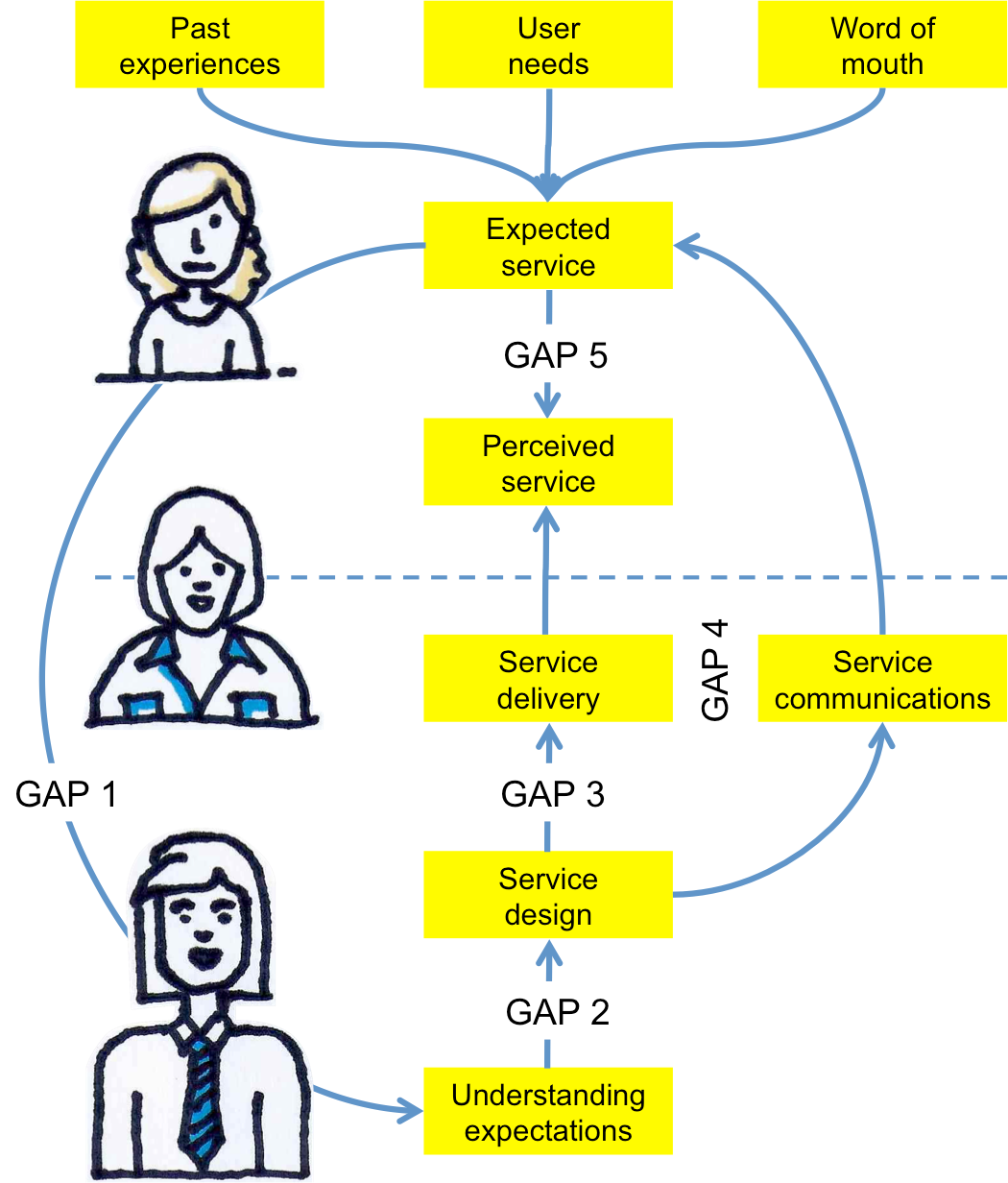
If Ireland manages to weave these user-centred principles into its e-health efforts, it might actually create services that are both secure, efficient, and, dare we hope, useful. It could even start to rebuild some of the public trust lost during the 2021 HSE cyberattack — when everyone’s data was at risk. As Ireland keeps investing in its e-health infrastructure, it needs to put some of that investment towards proper design and a genuine commitment to services that put people first.
HSE Health App: A step towards digital healthcare
Ireland’s Health Service Executive (HSE) has taken an important step in its e-health transformation journey with the launch of its Health App in February 2025. Developed under the Digital for Care framework, this app is designed to serve as a “digital front door” to health services, marking a significant milestone in digitising patient health records. Initial features include viewing maternity service appointments, creating digital medication lists, storing health insurance information, and accessing vaccination records. While these functionalities are promising, the app’s true potential lies in its development approach.
The HSE Health App reflects a strong commitment to user-centred design principles. Co-designed with patients, staff, and advocacy groups, the development process prioritised inclusivity and accessibility. Consulting with various patient organisations and forming a Patient Advisory Group ensured that diverse perspectives were incorporated into the app’s design. This collaborative approach was about creating an app that genuinely meets the needs of its users, including individuals with additional needs.
But this isn’t just about inclusivity; it’s about adaptability. The app’s development roadmap includes planned expansions and enhancements based on ongoing research and user engagement, and is currently inviting public servants to register for testing of the app. This iterative approach ensures that the app evolves alongside user needs and technological advancements. It’s clear that the HSE is aiming for more than just a static product, but rather it wants a service that grows and improves over time.
Agile Delivery: Borrowing Lessons from Across the Water
If some elements of the HSE Health App’s rollout feel familiar, it might be because Ireland has borrowed heavily from the UK government’s Service Manual for agile project delivery. This framework breaks down development into distinct phases: Discovery (understanding problems and user needs), Alpha (prototyping and testing assumptions), Beta (refining based on feedback), Live (launching with ongoing monitoring), and Retirement (decommissioning when necessary). It’s a structured approach that has proven effective in delivering public sector digital services, and Ireland seems keen to follow suit.
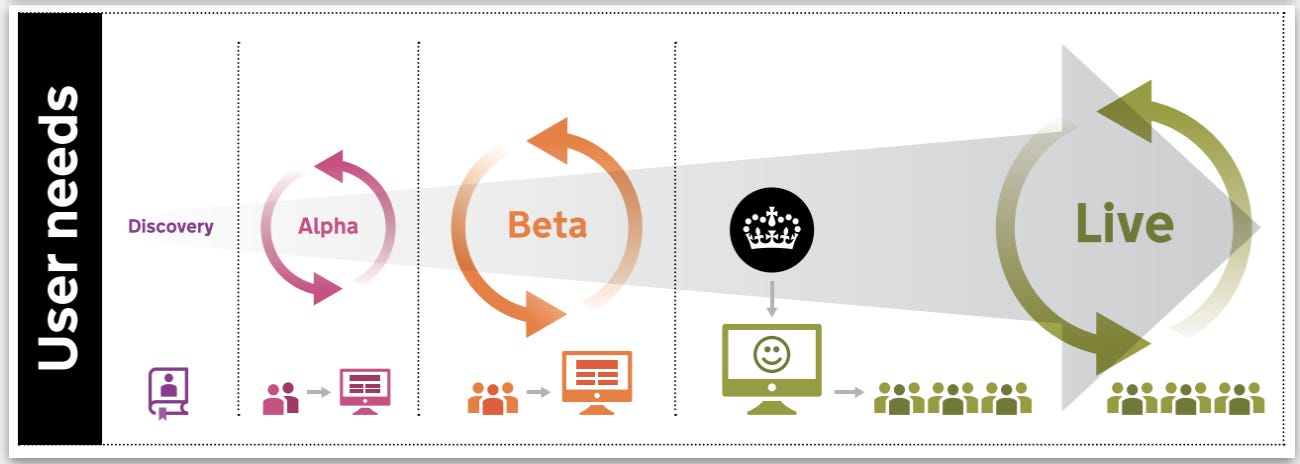
The phased rollout of the HSE Health App aligns closely with these principles. Its initial launch — offering limited features like maternity appointment viewing — functions effectively as a Beta phase. This allows the HSE to gather real-world usage data, identify areas for improvement, and refine functionality before expanding its scope. Plans to introduce additional features based on user feedback reinforce this agile approach, mirroring the iterative nature of both Beta and Live phases.
The co-design process further reflects agile principles from Discovery and Alpha phases by involving stakeholders early on to identify key priorities and challenges. By engaging patients, staff, and advocacy groups from the outset, the HSE ensured that pressing issues were addressed while designing an app that is intuitive and accessible for all users.
While some might argue that Ireland is simply copying best practices from its neighbour across the Irish Sea, there’s no denying the practicality of this approach. After all, if something works well elsewhere, why reinvent the wheel? What matters most is whether Ireland can adapt these principles effectively to meet its unique healthcare challenges.

Integration with the Government Digital Wallet: A litmus test
The next big test for Ireland’s e-health ambitions is already on the horizon: integrating the HSE Health App with the Government Digital Wallet slated for launch later this year.
This initiative is part of Connecting Government 2030, Ireland’s broader strategy to create seamless digital services across public sectors. The Government Digital Wallet promises to revolutionise how citizens interact with public services by securely storing digital versions of essential documents like driving licenses, birth certificates, and European Health Insurance cards.
This integration will serve as the litmus test for Ireland’s ability to transcend traditional departmental siloes and foster collaboration across government agencies. Success could set a precedent for future cross-departmental initiatives while paving the way for more efficient and citizen-centric public services.
However, challenges abound. Ensuring robust data privacy across interconnected systems will be critical in building public trust. Creating seamless user experiences across diverse services will require careful planning and execution. And maintaining flexibility to adapt to future technological advancements will be essential for keeping pace with evolving citizen needs.
Despite these hurdles, there’s reason for cautious optimism. If Ireland can navigate these challenges effectively, it could establish itself as a leader in integrated digital governance — not just within healthcare but across all public services. The integration of health services into this broader ecosystem will be a key indicator of progress toward creating a cohesive digital infrastructure that enhances citizen experiences at every level.