


I’ve felt a very welcome shift in tone across the World Design Congress, the Global Public Design Conference and SD in Gov these past few weeks – one i’ve taken some time to reflect on.
Pulling together threads from James Plunkett, Christian Bason, Kara Kane, Omar Idris, Andy Marsden (and many more), the emphasis has been less about technical slickness or defending methodological standpoints and more about cultivating a collective designerly way of doing things rooted in the humanity and humility of creating better public experiences.
A fantastic example is the Irish Government’s Department of Public Expenditure NDP Delivery and Reform Life-Events programme, which moves beyond department-focused service delivery to align cross-department services around singular life-event experiences – like welcoming a new child or finding a place to live. This kind of institutional reform, and the alignment of skills behind outcomes rather than structures, captures this shift in practice beautifully.
More broadly, this change reflects what Indy Johar framed at WDC as an invitation to design differently in order to design within a fundamentally different reality — ecological, social and economic — in a 3-degree warmer world. Hillary Cottam, building on Carlota Perez, anchors us in this moment in her book The Work We Need, reminding us that although periods of socio-technological transition are turbulent, they also carry the energy and promise of a new kind of future. That’s the energy at the edges James Plunkett has spoken and written so persuasively about.
This positioning also gives weight to what so many speakers have pointed towards, and was perhaps captured best in Mariana Mazzucato and Kate Raworth’s WDC conversation: that our systems have been designed – which means they can be redesigned.
Whether it’s alternative theories of economics that move us away from technocratic, neoliberal approaches and towards growth with direction and social benefit (such as Regen Melbourne’s *Melbourne Doughnut* or Leuven 2030’s mission for climate neutrality), new forms of civic democracy like Choose For Cheetham’s youth participatory budgeting, or the civic capabilities required to deliver them (which I think design sits at the heart of, and the UK’s Public Design Review is the start of) — the real question is not whether redesign is possible, but whether we’re prepared to take responsibility for it.
Of course, this shift in tone doesn’t come without tension. We’re speaking about challenging the entrenched paradigm of designing within an ultimately unsustainable set of systems – this means juggling expectations, perspectives, power and the complexities of actual human beings who are doing the work. This is perhaps (ironically) what is missing from design-led conversations. The voices of citizens, policymakers, developers and planners that are all involved in making change happen.
So where do we start? One of my highlights from this past few weeks was a session run by Julian Thompson, Ashley Evans and Courtney Mclean from Rooted by Design on reparative design. They introduced a set of principles that demanded a more participatory approach to systemic change, poking and prodding participants to question their own positionally and capacity for transformation. It was an important reminder: if our work wants to achieve systemic change, we must find ways to bring in voices beyond our profession, departments, institutions and social perspectives – not as an afterthought, but as the very condition of the work.
I can’t claim to have left the session prepared to design equitable places, policies or services but I do believe it helped open up my capacity to hold these questions in my own work – and to design ways that supports others in doing the same.
I don’t believe for a second design holds all the answers to the systemic issues we face. What I do believe is that it’s a malleable practice – one that allows us to hold systems lightly, to wade through the uncomfortableness of complex systems and differing perspectives, and to build the collective capacity to confront what we might otherwise avoid. This is not a solution in itself, but it is a start.
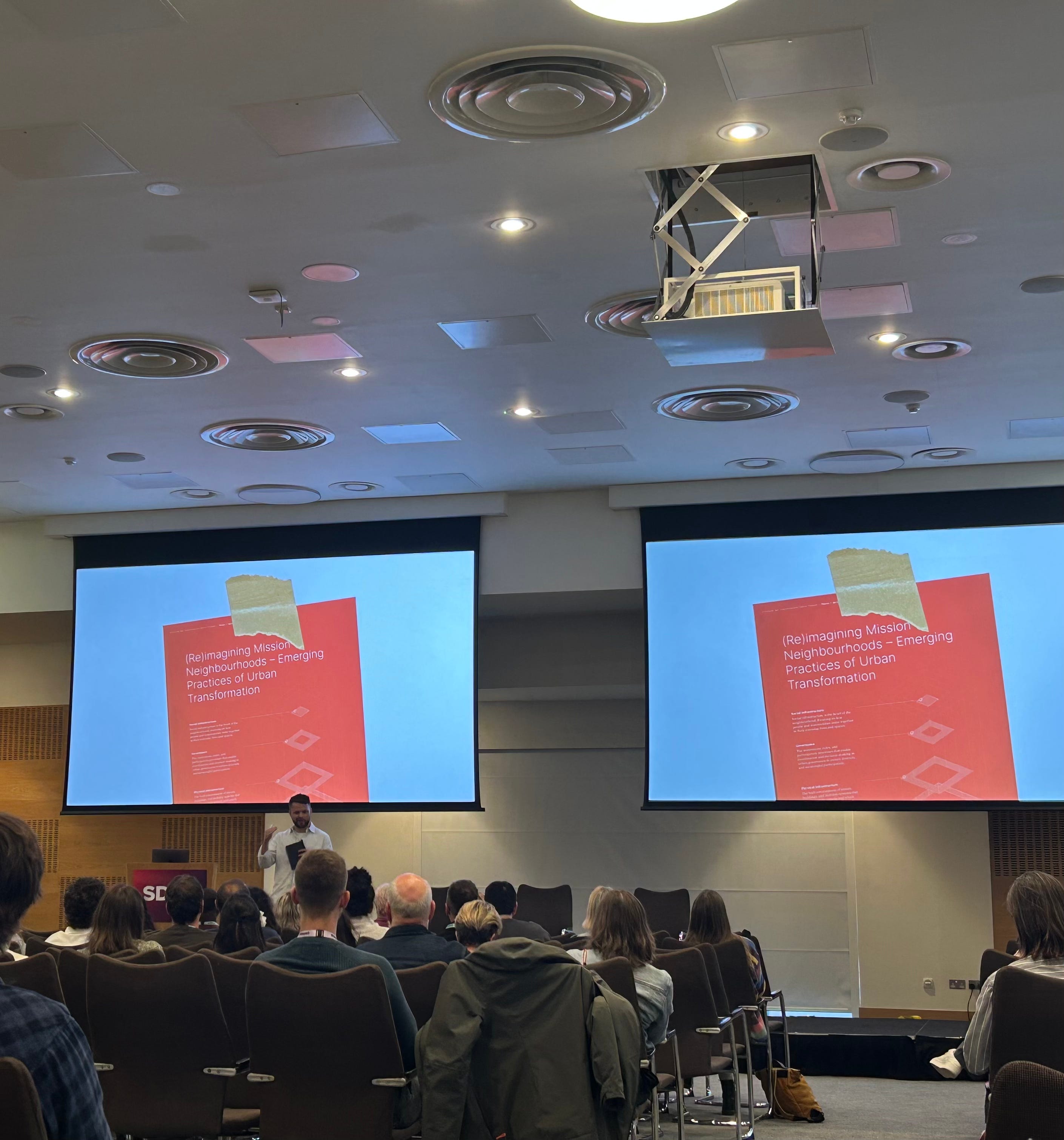
I’ve enjoyed reading reflections and thinking from across my network on these conferences and i’d love to keep the conversation going – it has also been a pleasure to speak more widely about my recent MPA thesis on urban mission practices culminating in the opportunity to do a lightning talk at SD in Gov.
References and resources (in order of appearance)
James Plunkett – Reflections on design practice (LinkedIn post): https://www.linkedin.com/posts/james-plunkett-a1472827_yesterday-i-had-the-pleasure-of-giving-a-activity-7374370000444506112-3LmA
Department of Public Expenditure, NDP Delivery and Reform, Government of Ireland – Life-Events Programme Case Study: https://publicpolicydesign.blog.gov.uk/wp-content/uploads/sites/255/2025/03/CASESTUDY.IRELAND.LIFEEVENTS_M.CASSIDY_MAR25.pdf
Hillary Cottam – The Work We Need: https://www.hilarycottam.com/the-work-we-need/
James Plunkett – The Energy at the Edges (Medium article): https://medium.com/@jamestplunkett/the-energy-at-the-edges-8732ac49ecc9
Regen Melbourne – Melbourne Doughnut: https://www.regen.melbourne/news/melbdoughnut
Leuven 2030 – EU 100 Climate-Neutral Cities Mission: https://en.leuven2030.be/
Shared Future CIC – Hope for Cheetham: Youth Participatory Budgeting: https://sharedfuturecic.org.uk/hope-for-cheetham-youth-participatory-budgeting/
UK Government – The Public Design Review (Evidence Review): https://www.gov.uk/government/publications/the-public-design-evidence-review
Rooted by Design – Rooted Centre: https://rootedcentre.org/